Mutriku, a global benchmark in Wave Energy
The Mutriku Wave Power Plant is a success story that, after 15 years of operation, has validated the technical viability of wave energy and its connection to the electrical grid.

What is the NEREIDA MOWC project and what motivated its development?
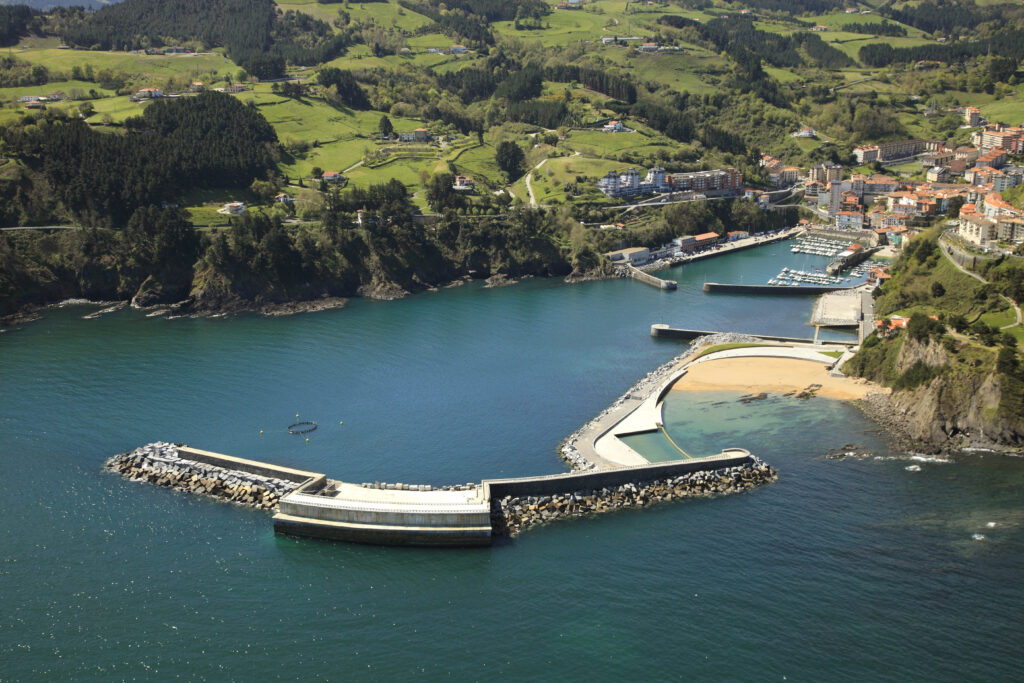
The NEREIDA MOWC project focuses on the design and construction of a wave energy plant with a multi-turbine configuration and grid connection. It is the first plant in the world with these characteristics. The project was located in Mutriku, where work was already underway to improve access to and protection of the inner harbour. Essentially, the construction of a new breakwater made it possible to launch this pilot project: a power generation plant.
In 2002-2003, the Basque Government’s Directorate of Ports and Maritime Affairs was finalising the approval process for this new breakwater in Mutriku and consulted the EVE (Basque Energy Agency) on whether the infrastructure could also be used to generate electricity from wave energy.
At that time, the sector was still in its infancy, and the completion of this project proved to be a major boost for the industry. NEREIDA MOWC demonstrates the technological viability of this energy source and, in particular, of the technology used by the plant to generate electricity. Furthermore, after 15 years of operation, it has also demonstrated the durability and reliability of this technology, which is essential for estimating the techno-economic viability of other devices with similar characteristics.
What is the technology used?
The plant uses Oscillating Water Column (OWC) technology to drive the turbines. The Mutriku breakwater contains 16 air chambers that are open to the sea below the water surface and open to the atmosphere at the top. As waves enter the chamber, the air inside is compressed and expelled through the upper opening. This airflow drives a turbine installed in the opening, which in turn drives a generator to produce electricity. When the wave recedes, a vacuum is created inside the chamber, causing air to be drawn back through the opening.
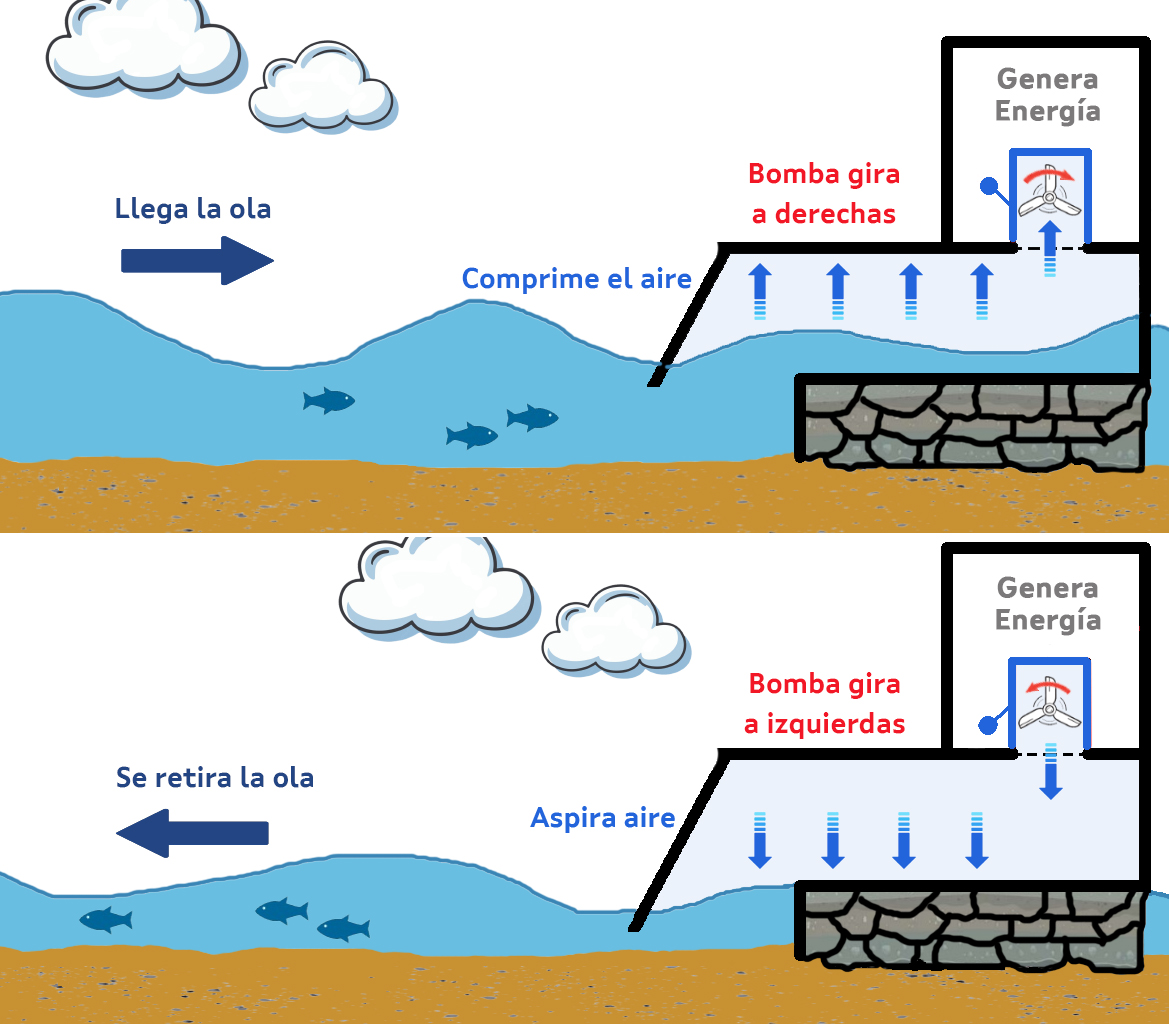
This incoming airflow once again drives the turbine, which, thanks to its design, rotates in the same direction regardless of the airflow direction.
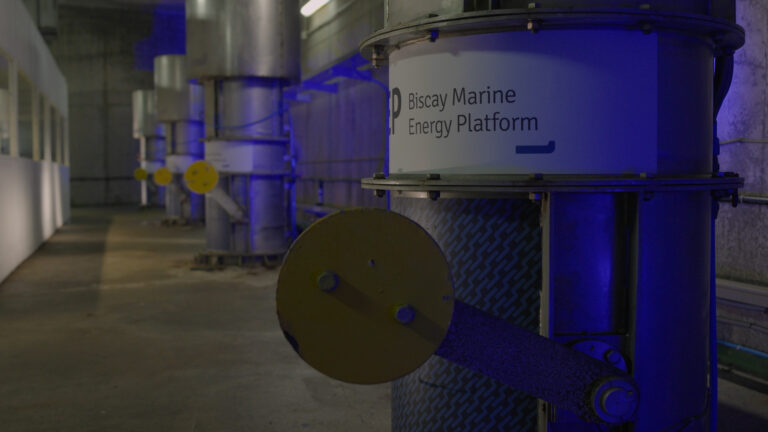
It is an innovative technology in which the turbines are a key element of the power take-off system. Unlike conventional turbines, OWC turbines are driven by air and must also cope with bidirectional airflow. They are ad hoc solutions specifically designed for wave energy generation devices. The plant consists of 16 reinforced concrete chambers measuring 4.5 m wide, 3.1m long and 9.7 m high. They occupy approximately 100 m of the breakwater, with the turbine gallery located above them, housing the turbine-generator modules. The plant has a rated capacity of 296 kW, although the primary objective is not performance or capacity factor, but rather the technical validation of the solution.
How was the connection to the electrical grid achieved?
The power take-off system consists of a back-to-back converter made up of a drive controlling the machine and an inverter that adapts the signal to grid requirements. In addition, a transformer substation raises the voltage to medium-voltage levels. Both the converters and the transformer room are located in a separate area from the turbine gallery.
Since commissioning in 2011, the plant has generated more than 3.5 GWh of electricity, which has been directly injected into the local grid. It is currently the longest-operating plant of its kind and the one that has generated the highest amount of energy worldwide.
What are the main challenges that this project has had to overcome?
The main challenges have been technological. The operating principle itself had hardly been validated. In addition, salty and humid environmental conditions, combined with the force of the waves and the airflow that generates mechanical stress, require mechanical and electrical maintenance work at least once a month.
There have also been environmental challenges, particularly the noise generated by the air turbines. To minimise this impact, the turbine gallery is soundproofed, preventing noise from being transmitted into the marine environment. Furthermore, no environmentally harmful oils or lubricants are used.
As for social acceptance, although large-scale projects often generate divided opinions, this project has helped improve public awareness and acceptance of marine energy technologies.
Has economic viability also been achieved?
Achieving economic viability requires first achieving technical viability, and this is the main priority of the project. The plant has demonstrated that the technology works and also provides a real-world platform for testing and validating new designs. Future wave energy plants are likely to be installed offshore, where economic viability is expected to be greater. However, achieving this will require accurate predictions of device performance, reliability and maintainability. The Mutriku plant contributes significantly to these three aspects, making the transition to commercial-scale deployment safer and more cost-effective.
What are the next steps to ensure the viability of this technology at all levels?
To bring the technology to its target stage, progress must be made through short but steady and reliable steps. Continued investment in R&D is required to develop commercial devices and, of course, any advances achieved must be tested and validated in real operating environments.
Research efforts are now focused on offshore devices, as energy density is higher offshore than along the coast. However, we must develop devices that can withstand severe storms, experience few failures and generate energy more efficiently. At the same time, the required investment must be kept as low as possible so that the electricity produced is cost-effective and commercially viable.